Review: Data Repair Color Icons for Real Embroidery Projects
As a designer who spends more time in the embroidery hoop than behind a desk, I have seen countless digital assets promised to be "perfect" only to fail miserably when stitched. That is why I treat every new download with a healthy dose of skepticism until I see how it translates from screen to thread. Today, I am putting Data Repair Color Icons through the wringer. This isn't just about looking at a pretty image; it is about understanding if this design holds up under the tension of a sewing machine needle and if it will stand out on a finished product that a customer actually wants to buy.
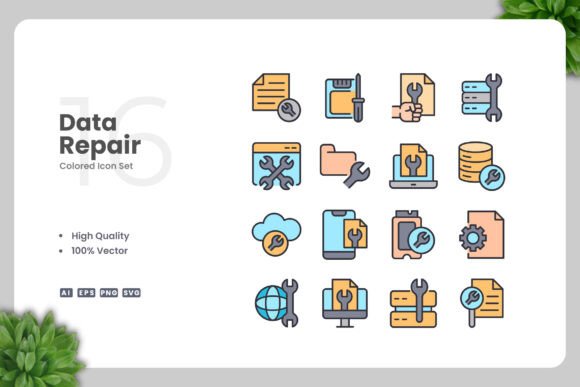
The description calls it a "simple and clean design," which sounds like marketing fluff until you look at the actual file. The first impression of Data Repair Color Icons is one of modern utility. It does not scream for attention with chaotic details or overwhelming textures. Instead, it offers a structured, professional look that feels right at home in a tech-savvy environment. For an embroidery project, simplicity is often the hardest thing to achieve because you cannot rely on fine lines or subtle gradients to carry the visual weight once the fabric distorts slightly around the stitches. This design manages to keep its personality intact without trying too hard.
From Digital Vector to Stitched Reality
One of the strongest selling points mentioned in the product details is the ability to resize and change color easily on vector software. In my experience, this is where many designs fall apart. If you cannot manipulate the geometry of a graphic before converting it to a stitch file, you are stuck with what you get. With Data Repair Color Icons, the flexibility suggests that the underlying structure is solid. This matters immensely when you are trying to fit a design onto a specific garment or accessory.
I imagine a scenario where a small business owner needs to create a line of custom branded tote bags for a tech conference. They need something that looks sharp but doesn't require hours of digitizing work. Using Data Repair Color Icons, they could swap the colors to match their brand palette and adjust the size to fit perfectly within the standard 4x4 hoop area. The clean lines translate well into satin stitches, which give that crisp, raised edge we all love on embroidered goods. However, the reviewer must be careful: while the design is simple, simplicity can sometimes mean a lack of stability if the stitch density is too low. Before committing to a full run, I always advise testing the stitch density on scrap fabric to ensure the design doesn't pucker the material.
Where This Design Shines in Your Craft Business
If you are an Etsy seller or a crafter looking to expand your inventory, Data Repair Color Icons fits naturally into several high-demand categories. The theme is versatile enough to work on custom apparel like sweatshirts and t-shirts, especially for those targeting a younger, digital-native demographic. It also excels as a decorative element on home goods. Imagine a set of kitchen towels featuring these icons in a grid pattern. The clean aesthetic pairs beautifully with cotton or linen fabrics, adding a touch of modern organization to a rustic kitchen.
Beyond home decor, this design has potential as a personalized gift. Parents often look for unique nursery items that aren't the typical animals or clouds. A baby onesie or a soft blanket embroidered with a stylized data repair icon could appeal to tech-savvy parents who want something meaningful yet modern. The design also works exceptionally well for embroidered patches intended for denim jackets or backpacks. Because the lines are distinct, the edges can be cut cleanly, making it a great candidate for applique or tight satin stitch borders.
For commercial projects, the versatility extends to branding materials. Small shop owners often struggle to find cohesive visual elements that work across different mediums. Since the original description notes its suitability for websites, infographics, and flyers, using the same graphics in your physical embroidery products creates a seamless brand identity. A boutique that sells handmade accessories could use this icon on their hang tags, their website, and their embroidered shopping bags, reinforcing trust and professionalism with every interaction.
Practical Limitations and Where to Proceed with Caution
While Data Repair Color Icons is a strong contender, no single design is perfect for every situation. There are specific scenarios where this file might struggle. First, consider the hoop size. If you are working with very small hoops, such as those used for cap brims or tiny baby booties, the detail level might become too compressed. Even a simple design can lose its clarity if the individual elements are forced into a space smaller than intended. Always check the minimum recommended dimensions before stitching.
Fabric texture is another critical factor. On highly textured fabrics like heavy bouclé or thick fleece, the definition of the icon may get lost. Similarly, on stretchy knits, the design needs to be balanced with the correct stabilizer to prevent distortion. If you attempt to embroider this on a dark fabric without a proper underlay or if the thread color contrast is poor, the "clean" look will turn muddy. I recommend running a test on both light and dark backgrounds to ensure the thread colors pop as expected.
Furthermore, avoid placing this design on curved surfaces like caps unless you have significant experience with curved embroidery. The geometric nature of the icon requires flat planes to maintain its structural integrity. If the curve is too severe, the straight lines might bow, ruining the professional appearance of the final product. Also, for items that require frequent washing, such as aprons or work shirts, ensure the stitch count is sufficient to withstand abrasion. A design that relies on thin lines might fray over time if not properly reinforced.
Essential Steps Before You Start Stitching
Before you load this file into your machine and start a production run, there are a few non-negotiable steps to take. First, always test the design on scrap fabric. This is the golden rule of embroidery. It allows you to catch issues with tension, density, or alignment before you ruin a valuable piece of merchandise. Check the stabilizer type; a design that looks good on stable fabric might shift on unstable materials without the right backing.
You should also inspect the small details closely. While the design is described as simple, zoom in to ensure there are no stray nodes or jagged edges that could cause thread breaks. Review the stitch density in your digitizing software. If the fill areas are too dense, the fabric will bunch up; if they are too sparse, the design will look patchy. Comparing the design in black and white mockups can also help you visualize how it will look without relying on color perception.
Finally, verify the licensing terms. Just because a design is easy to edit does not automatically mean you can sell the finished product. Confirm whether the license covers commercial use, personal gifts, and resale of digital files if you plan to offer them as part of a package. Understanding these legal boundaries protects your craft business from future headaches.
In conclusion, Data Repair Color Icons is a practical, versatile asset for any designer looking to add a modern touch to their embroidery portfolio. It balances aesthetics with functionality, making it suitable for everything from holiday gifts to boutique branding. By respecting its limitations and following proper testing protocols, you can transform this digital vector into a tangible, high-quality finished product that customers will love.